Source Telescopic Diesel Aerial Work Vehicle for Maintenance
Find 30 telescopic diesel aerial work vehicle options with varying lifting capacities and dimensions. Compare specifications such as 10-ton capacity and 150-250hp power to identify suitable models for industrial maintenance and construction tasks; compare the available evidence and request quotations based on your requirements.
Key considerations
Products List


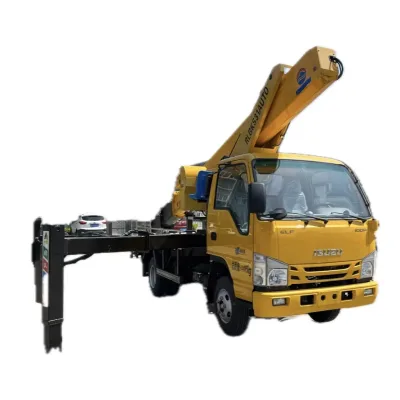


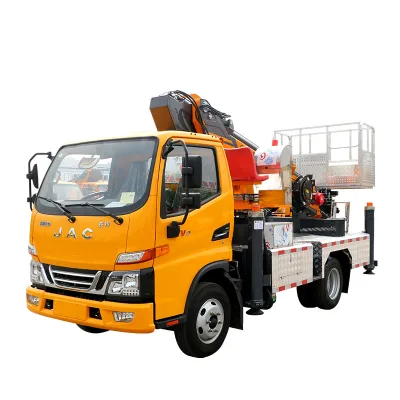


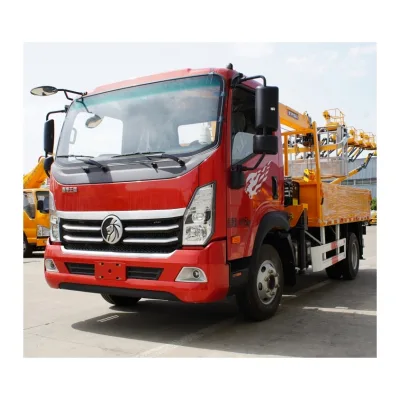
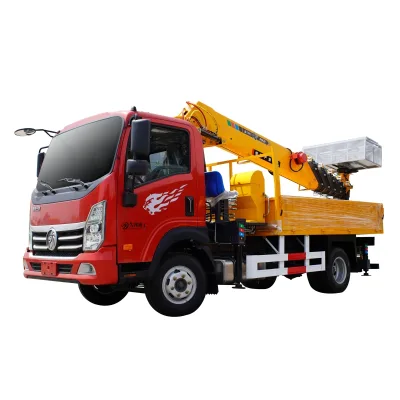
Comprehensive Sourcing Guide
Telescopic Diesel Aerial Work Vehicle Sourcing Guide
Procuring a telescopic diesel aerial work vehicle requires buyers to balance lifting capability, chassis configuration, and the compliance demands of the destination market. The listings observed in this category span a wide price band, from roughly $3,800 to $105,000, which reflects meaningful differences in working height, chassis class, and whether the unit is a complete truck-mounted system or a crane and aerial component package. Because the category mixes complete vehicles with attachment-level equipment, the first sourcing decision is to define precisely what your project scope requires: a self-propelled platform, a truck-mounted telescopic boom, or a separate lifting mechanism to be installed on a chassis you already own. Clarifying this before requesting quotations prevents mismatched offers and simplifies later technical comparisons.
Buyers should also treat listing data as a starting point rather than a guarantee. Many listings in this category show a minimum order quantity of one unit, which favors pilot purchases and single-unit fleet additions, but the wide price dispersion means identical-looking offers can hide substantial differences in boom structure, hydraulic specification, and after-sales support. Use this guide to structure your verification checklist before committing funds.
Product Scope and Observed Listing Signals
The observed listings describe equipment in several overlapping configurations. Some products are presented as complete aerial work vehicles with four-wheel diesel drive, automatic transmission, and engine output in the 150–250hp range, with overall dimensions such as 5995×1960×2660mm. Others are listed as truck cranes with straight-arm or four-arm jib configurations, maximum lifting capacities up to 10 tons, maximum lifting moments around 25 ton·m, and working radii reaching 14m. A third group appears as self-propelled aerial platforms with X-leg outriggers, double-chain transmission structures, and models such as GKS-56 and GKS-36. Recognizing which configuration a listing represents is the first filtering step.
Additional signals help segment the category. Emission standards such as Euro 3 appear on some chassis listings, origin locations include Xuzhou in Jiangsu and Hebei province, and certifications listed include ISO and CE marks. Packaging options range from bubble film and wooden crates to container shipping, and customization is explicitly available on several listings, including custom logos and optional colors. Model designations like LZP5035JGK and F250TC-04 should be cross-checked against the dimension and weight data in each listing to confirm internal consistency before shortlisting.
Technical Specifications to Verify
Boom and platform performance deserve the closest scrutiny. For crane-style listings, confirm the maximum elevation angle (one listing states 75 degrees), the slewing capability (360-degree continuous rotation appears in the data), and the working radius at the rated load, since a 14m radius figure is only meaningful when paired with the corresponding capacity chart. For aerial platforms, verify the working height claim against the stated dimensions; one listing cites a 60m working height, which places it in a specialized class and demands independent confirmation of the boom structure and stability calculations before acceptance.
Hydraulic and chassis parameters form the second verification cluster. One listing specifies a hydraulic system pressure of 26 MPa, a flow rate of 50+32 L/min, an oil tank capacity of 200L, and a recommended power of 37kW; buyers should request the full hydraulic schematic and confirm that pump, valve, and cylinder ratings match these figures. Self-weight figures also vary widely in the observed data, from 3,560kg for a crane component to 18,000kg gross for a complete unit, so confirm installation space requirements (one listing cites 1,200mm) and verify that the destination road network and transport plan can accommodate the chosen configuration.
Compliance and Safety Documentation
Certification claims in the listings should be converted into verifiable documents before contract signature. Where ISO and CE marks are cited, request the actual certificates, confirm the issuing body, and check that the certificate scope covers the specific product model being purchased rather than a generic factory capability. For chassis-driven units, the stated Euro 3 emission standard must be reconciled with your destination market's import rules; many regions now enforce stricter tiers, and a vehicle certified only to Euro 3 may be ineligible for registration or road use, so verify the emission requirement of your market independently of the listing.
Safety documentation should include the load capacity chart, stability test records, outrigger force calculations for X-leg or similar outrigger configurations, and the manufacturer's operating and maintenance manuals in a language your operators can use. For units intended for personnel lifting, confirm which safety devices are fitted — including overload protection, emergency lowering, and limit switches — and ask for evidence that these were functionally tested on the finished unit. Buyers should not rely on brochure-level statements; insist on dated test documentation tied to the serial number of the unit you will receive.
Cost Drivers and Commercial Terms
The observed price range of $3,800 to $105,000 signals that configuration, not brand alone, drives cost. The largest differentiators are working height or lifting capacity, chassis class and horsepower (the 150–250hp band appears in this category), emission compliance level, and whether hydraulic systems are specified to demanding parameters such as the 26 MPa pressure seen in one listing. Customization — logos, colors, and structural modifications — is available on several listings and typically adds cost and lead time, so decide early which customizations are commercially necessary and which can be deferred.
With a minimum order quantity of one across the observed listings, buyers can negotiate per-unit terms rather than volume discounts, which shifts negotiating leverage toward quality guarantees, spare-parts packages, and warranty scope. Packaging choices — bubble film, wooden crates, or container shipment — affect landed cost and damage risk, so specify the packing standard in the contract, particularly for boom sections and outriggers. Agree on inspection rights before shipment, payment milestones tied to verified production stages, and who bears the risk during transport. Clarify that after-sales support, listed in some cases as video technical support and online support, is contractual rather than optional goodwill.
Supplier Qualification and Quality Control
Supplier qualification should begin with origin verification and factory capability assessment. Observed origins include Xuzhou in Jiangsu — a recognized cluster for construction machinery — and Hebei province, but location alone does not indicate quality. Request business licenses, production facility evidence, and references from prior exports to your market. Ask which components — boom steel, hydraulic pumps and valves, chassis, and control systems — are manufactured in-house versus sourced, because this determines how effectively a supplier can resolve defects and maintain spare-parts availability over the vehicle's service life.
Quality control during production matters more than final inspection alone. Define hold points where you or a third-party inspector can verify weld quality on boom sections, hydraulic assembly cleanliness, outrigger alignment, and completion of functional tests under load. For listings citing a self-weight of 3,560kg for a crane unit or 18,000kg gross vehicle weight for complete vehicles, verify actual weighed results against specification at inspection. Request a pre-shipment inspection report covering dimensions — such as the 5995×1960×2660mm or 10050×2500×3880mm configurations seen in the data — and confirm paint, marking, and packaging match the agreed specification before release.
Long-Term Procurement Checks
After-sales infrastructure determines the true cost of ownership. Listings in this category cite video technical support and online support, which is useful for diagnostics but insufficient for mechanical failures; establish in advance who supplies replacement hydraulic seals, boom wear parts, and outrigger components, at what lead times, and whether technical staff can be dispatched if remote support cannot resolve an issue. Confirm the warranty duration, what it covers, and the claim procedure in writing, and ask for recommended spare-parts kits to hold locally from day one.
Plan for the vehicle's full service cycle before purchase. Diesel drivetrains require consumable parts, filter schedules, and eventual engine or hydraulic overhauls, so confirm parts documentation and service intervals are provided in the manuals. Keep serial numbers, test records, and certification copies in a procurement file to support resale, deregistration, or accident investigations later. Finally, evaluate the supplier's responsiveness during the quotation and inspection phases as a predictor of post-sale behavior — suppliers who are slow to document claims before payment rarely improve afterward. Reassess the supplier after the first unit's first year before committing to fleet-level repeat orders.
FAQs
What is the maximum lifting capacity for these vehicles?
The maximum lifting capacity is 10 tons. This specification applies to models featuring a four-arm crane jib and straight arm type configuration. Buyers should verify the specific model number, such as LZP5035JGK, to confirm this load rating aligns with their operational requirements and safety standards.
Can the vehicle be customized for specific branding needs?
Yes, customization is available for these units. Buyers can request customized logos and optional color schemes to match corporate identity. The product origin is China, with specific manufacturing locations including Xuzhou, Jiangsu, and Hebei. This flexibility allows for tailored branding without compromising the core hydraulic or diesel engine performance.
What is the slewing angle and working radius?
The slewing angle allows for 360-degree continuous rotation. The working radius extends up to 14 meters. These dimensions are supported by a hydraulic system pressure of 26 MPa and a flow rate of 50+32 L/Min. This configuration ensures precise positioning and stability during aerial work operations at various heights.
What transmission type and fuel are used?
The vehicles utilize diesel fuel and feature an automatic transmission type. Some models may offer manual transmission options depending on the specific configuration. The drive wheel setup is 4x4, ensuring robust traction. This combination provides reliable power delivery and ease of operation for heavy-duty aerial work tasks in diverse terrain conditions.
What certifications are provided for these aerial work vehicles?
ISOCE certification is provided for these units. This standard ensures compliance with international quality and safety requirements for manufacturing. Buyers should verify the specific model, such as GKS-56, to confirm that the certification documentation is complete. This certification supports global sourcing and regulatory compliance for industrial and construction applications.
How is the vehicle packed for shipping?
Packaging options include bubble film packaging or wooden packages. Some models are shipped in containers to optimize logistics. The gross vehicle weight varies, with some units weighing 18000kg. This robust packaging protects the hydraulic system and structural components during transit from origins in China to international destinations.